
I Cooked Dinner for Strangers in Amsterdam — Here's What Happened
It was a Sunday afternoon in Amsterdam.
I had a pot of ragù on the stove that could have fed a small village, a lasagna in the oven that was way too big for one person, and absolutely nobody to eat with. I'd been living in Amsterdam for a while by that point. I'm Italian — cooking is what I do when I'm happy.
The problem is that cooking for one is depressing. Food is meant to be shared! So I did something that, looking back, was either brave or completely insane. I opened Reddit, went to r/Amsterdam, and typed: "I am making lasagna for lunch this Sunday. I am inviting strangers. Anyone in Amsterdam want to come?" I expected five replies and maybe one person who'd actually show up. I got hundreds of replies. And three strangers at my door.
The first dinner
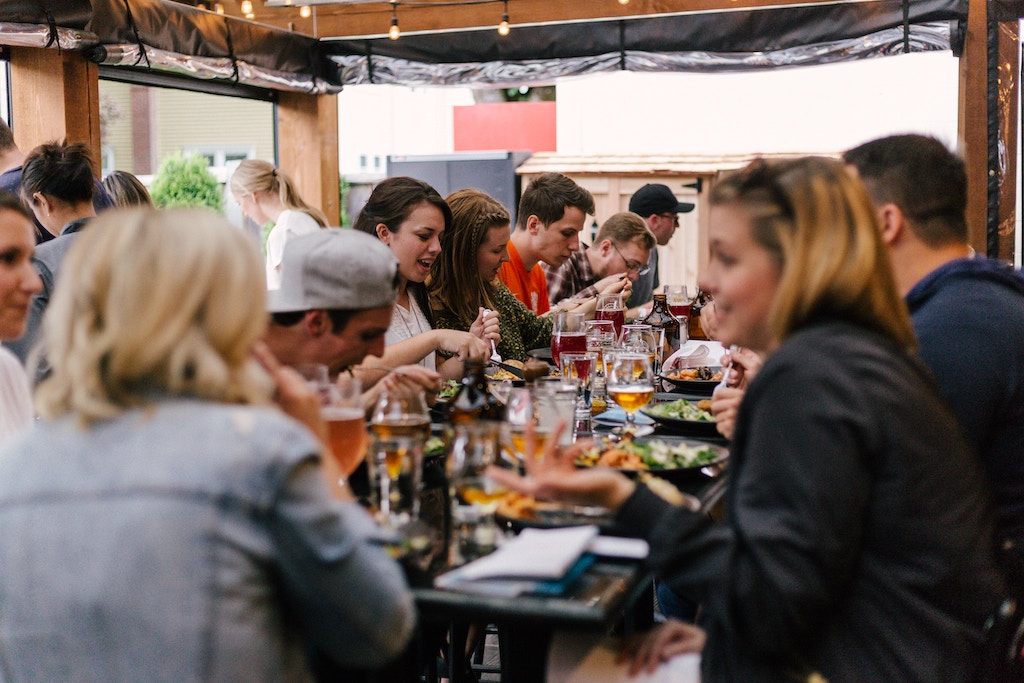
Their names aren't important, but who they were is. An American, a Swiss and a Dutch. None of them knew each other. None of them knew me. They all showed up at my apartment in Centrum on a Sunday afternoon because a stranger on the internet promised them lasagna. And then I put the lasagna on the table. I don't know what it is about food — specifically about someone putting a home-cooked dish in front of you — but it changes the temperature of a room instantly. The stiffness melted. Someone asked where I learned to cook. Someone else made a joke about how their cooking skills peaked at instant noodles. Within twenty minutes, people were laughing, interrupting each other, and reaching for seconds. Where they grew up. What they missed about home. Why Amsterdam sometimes feels like the loneliest city in Europe despite being full of people. Nobody checked their phone for three hours. The Dutch woman texted me the next day: "That was the best Sunday I've had since moving here." So I did it again Maybe I just got lucky with three great people. So I posted again on Reddit, this time for a different meal on a different weekend. Same thing happened. Strangers showed up, nervous at first, relaxed by the time the food arrived, and exchanging numbers by dessert. I kept posting. Across six posts on r/Amsterdam, over 500,000 people saw what was happening. The comment sections were flooded with the same reactions: "Where do I sign up?" "Can you do this every week?" "Someone should build an app for this." That last comment kept appearing. Again and again. "Someone should build an app for this." I kept thinking: why not me? What I learned from cooking for strangers Before I get to the part where I actually built the thing, I want to share what those first dinners taught me. Because they changed how I think about food, connection, and what it means to feel at home in a city. People are braver than you'd think. Every single person who came to my apartment made a decision that most people would never make: they went to a stranger's house for dinner. They didn't know what I looked like. They didn't know if I could actually cook. They didn't know who else would be there. And they came anyway. That told me something important — people are desperate for connection, and they'll take a real risk to get it. Home-cooked food is a shortcut to honesty. There's something about eating in someone's kitchen that makes people drop their guard. A restaurant meal is a performance. A home-cooked meal is an invitation to be yourself. I watched people open up faster at my kitchen table than I've ever seen at any bar, party, or networking event. The "stranger" part disappears fast. I expected the dinners to feel weird for at least an hour. In reality, the weirdness lasted about ten minutes. Once food is on the table and someone makes the first joke, you forget that you don't know these people. By the end of the night, "strangers" feels like the wrong word entirely. Amsterdam has a loneliness problem. Not the kind that makes headlines, but the quiet kind. The "I have a nice apartment and a good job but I eat dinner alone five nights a week" kind. Almost every person who came to my dinners said some version of the same thing: "I've been here for a year and I still don't have close friends." Amsterdam is an incredible city. But it's also a city where making genuine connections is harder than it should be. Not everyone needs to be the host. Some of the best guests were people who said "I could never host something like this." You don't have to be a chef or overcomplicate yourself.
Building The Dinner Club
After the fifth or sixth dinner, I couldn't keep doing this manually. I was managing everything through Reddit DMs — coordinating schedules, sharing my address, following up afterwards. It worked for three people at a time, but it didn't scale. And the demand was clearly there. I'm not a developer. I don't have a computer science degree. I don't have a team or investors or an office. I'm an Italian guy in Amsterdam who cooks too much and apparently wants to bring strangers to eat together. But I knew what I wanted: a platform where anyone could do what I did. Where any home cook in Amsterdam could list a dinner, and anyone looking for connection could book a seat. I taught myself no-code tools. I connected Stripe for payments so hosts could get paid and guests could pay securely. I set up a database. I built a review system. I spent a lot of late nights staring at my laptop with a cold espresso next to me, wondering if anyone would actually use this. The result is The Dinner Club.
How it works now
The concept is exactly what it sounds like: If you love cooking, you can host a dinner at your home. You pick the date, decide what to cook, you can share the cost of groceries ( though most host for free), and choose how many people to invite — usually two to five guests. When someone requests a seat, you approve or decline them. You're always in control. If you want to meet people, you browse upcoming dinners on the platform. You can filter by neighborhood, cuisine, date, and price. You book a seat, pay upfront, and get the host's address after they approve you. Then you show up, eat a home-cooked meal, and meet people you've never met before. After the dinner, both sides leave reviews. This builds trust over time — new guests can see that a host has received great reviews from previous dinners, and hosts can see that a guest has attended before and been a good addition to the table. It's simple because it should be. The magic isn't in the technology. The magic is in the moment when someone puts a plate of food in front of you and says "I made this for you" — and you're sitting next to someone you met fifteen minutes ago, and somehow it already feels like you belong there.
##What happens at a Dinner Club dinner## I still host regularly, and I still get nervous every time someone new walks through my door. That never goes away. But I've now seen enough dinners — both mine and other hosts' — to know what typically happens. The first few minutes are always a little tentative. People arrive, take off their shoes (this is Amsterdam after all), and hover in the kitchen offering to help. The host is usually finishing something on the stove. Someone opens a bottle of wine. There's a brief round of "so where are you from?" Then the food comes out. And everything shifts. Conversation flows naturally because there's no pressure. This isn't a networking event where you have to sell yourself. It's not a date where you're performing. It's just dinner. You eat, you talk, you laugh, you ask for the recipe. By the time the plates are cleared, something has changed. People are leaning in, sharing stories, making plans to meet again. I've seen guests discover they live on the same street. I've seen people who came alone leave with a group chat. I've seen someone who'd been in Amsterdam for three years say it was the first evening she felt like part of the city. That's what keeps me going. Not the platform. Not the numbers. The look on someone's face when they realize they just made real friends over a bowl of pasta.
Join us
The Dinner Club is live in Amsterdam. Every week, hosts across the city are cooking and opening their doors. If you've ever felt like making friends in this city is harder than it should be — you're right, and you're not alone. But there's a table waiting for you somewhere in your neighborhood, with a home-cooked meal and a few strangers who are about to become your friends. Browse upcoming dinners (https://thedinnerclub.eu/explore) or become a host → https://thedinnerclub.eu? And if you're reading this thinking "I could never go to a stranger's house for dinner" — I get it. Every single person who came to my first lasagna dinner felt the same way. They came anyway. And none of them regretted it.
Dani is the founder cook of The Dinner Club, a social dining platform in Amsterdam. He started by cooking lasagna for Reddit strangers and accidentally built a community. He still hosts regularly and his tiramisu is, according to at least three strangers, "life-changing."
Read the other blog: https://thedinnerclub.eu/blog/how-to-meet-people-in-amsterdam-2026-guide