
How to Join a Dinner Party in Amsterdam (Even If You Don't Know Anyone)
You're in Amsterdam.
It's a Friday evening. You don't have plans. Your flatmate is out, your friends are busy, and the idea of cooking for one and eating in front of your laptop, again, makes you want to scream. ahah You want to go out, but not to a bar where you'll stand alone holding a drink. Not to a restaurant where you'll be the solo diner at a table for two. You want something that actually feels like a social evening — conversation, food, and people — without needing to already know someone to make it happen.
What if you could just join a dinner party?
Walk into someone's home, sit at a table with a few other people, eat a home-cooked meal, and spend the evening talking, laughing, and maybe making a friend or two? You can. And it's happening across Amsterdam every week. What is a dinner party for strangers?
The concept is simpler than it sounds.
A host — someone who lives in Amsterdam and loves to cook — creates a dinner listing on a platform. They choose the date, the menu, the number of guests (usually two to five), and the price. Guests browse available dinners, pick one that interests them, and book a seat. On the night of the dinner, everyone shows up at the host's home, eats together, and spends the evening getting to know each other. Nobody at the table knows each other beforehand. That's the whole point.
It's not a restaurant.
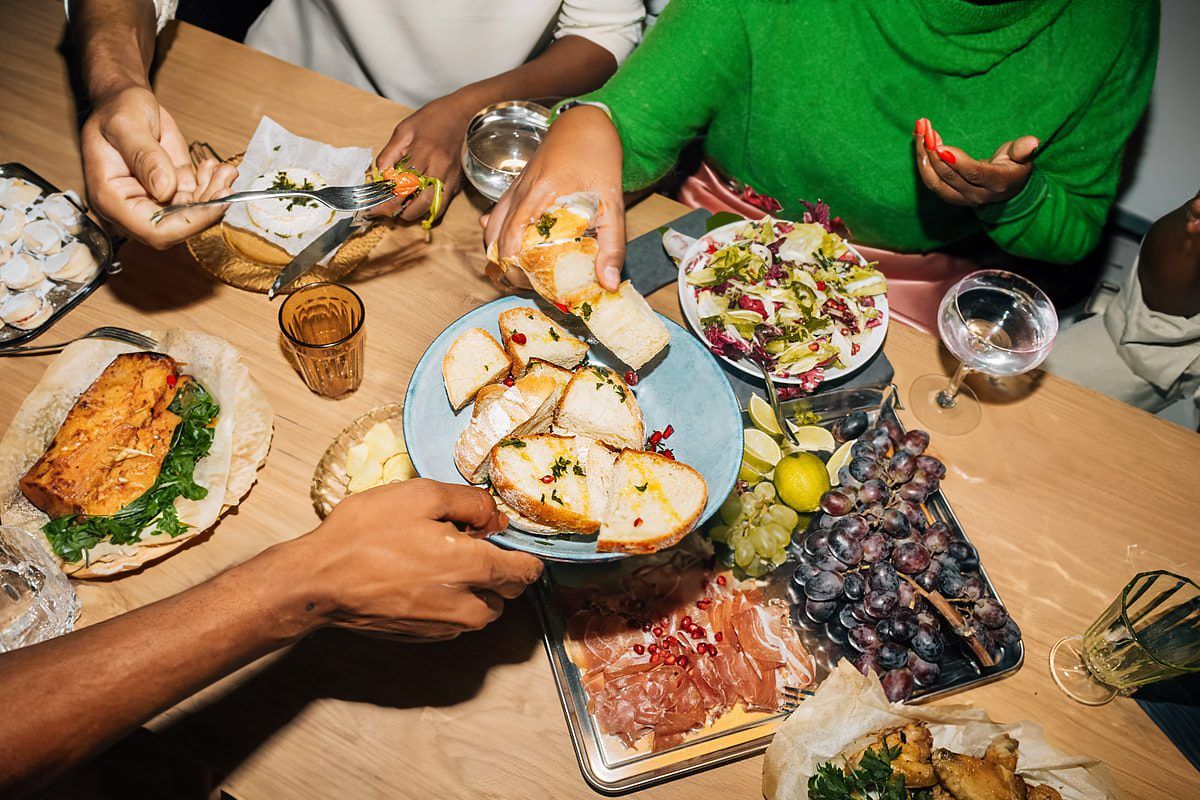
There's no waiter, no menu, no bill at the end. Payment happens in advance through the platform. What you get instead is something no restaurant can offer: the intimacy of someone's kitchen, the warmth of a home-cooked meal, and a table small enough that everyone is part of the same conversation. Think of it as being invited to a friend's dinner party — except the friend is someone you haven't met yet, and so is everyone else at the table. Where to find dinner parties in Amsterdam Social dining has been growing steadily in Amsterdam, driven by a mix of expat loneliness, food culture, and a generation that's looking for alternatives to swiping and scrolling.
The Dinner Club is an Amsterdam-based platform specifically built for this.
Local hosts list their dinners — Italian in Centrum, Korean in Oost, Mexican in De Pijp, Indian in Zuid — and guests browse by neighbourhood, cuisine, date, and price. Everything from free community dinners to €25 multi-course evenings. What makes it different from larger platforms like EatWith (which focuses on tourists) or Timeleft (which seats strangers at restaurants) is the focus on real community. The Dinner Club is built for people who live in Amsterdam — expats, students, young professionals — who want recurring connections, not a one-off experience. Many guests come back for a second or third dinner within weeks. Some eventually become hosts themselves.
Browse upcoming dinners in Amsterdam → thedinnerclub.eu/explore
How to book your first dinner
The process takes about two minutes: Go to thedinnerclub.eu and click "Explore Dinners." You'll see a list of upcoming dinners across Amsterdam and Rotterdam. Each listing shows the cuisine, the neighbourhood, the date and time, the price, the host's name, and how many spots are left. Click on a dinner that interests you. You'll see a more detailed description — what the host is cooking, the vibe of the evening, dietary options, and what to expect. If it looks good, book a seat. You'll pay securely through the platform. The host will review your profile and approve your booking. Once approved, you'll receive the host's address and any details about the evening — what to bring, what time to arrive, and anything else you need to know. Then you show up. That's it.
What to expect at your first dinner
Let's be honest about this part: the first two minutes are awkward. You're standing at someone's front door. You don't know this person. You don't know who else is inside. There's a brief moment where your brain says "what am I doing?" and your finger hovers over the doorbell. Ring it anyway. Everyone who has ever attended a dinner with strangers has felt exactly this way. And everyone will tell you the same thing: the awkwardness disappears within minutes. Here's what a typical evening looks like: You arrive. The host opens the door and welcomes you in. There are usually one to four other guests, most of whom are also arriving around the same time. The host offers a drink — wine, beer, water, sometimes a welcome cocktail. You stand in the kitchen or living room and do the initial round of introductions: names, where you're from, what brought you to Amsterdam. This part feels like small talk, and it is.But it passes quickly because the food creates a natural transition. The host starts bringing dishes to the table. Everyone sits down. And something shifts. The conversation changes. Instead of trading facts about each other's jobs, people start telling stories. Someone mentions a trip they took. Someone else asks the host how they learned to cook this dish. A debate starts about whether Dutch food gets too much criticism. Someone shares something personal — not because they planned to, but because the setting makes it easy. By the time dessert arrives, you've had a genuine conversation with every person at the table. You know their stories. They know yours. Someone suggests meeting up again. Numbers get exchanged. The whole evening lasts about three hours. You leave with a full stomach and the quiet buzz of having connected with people in a way that doesn't usually happen in a city like Amsterdam.
Who goes to these dinners?
The short answer: everyone. At any given Dinner Club dinner, you might sit next to a 24-year-old UvA student from Brazil, a 35-year-old consultant from Germany, a 29-year-old designer from the Netherlands, and a 40-year-old teacher from the UK. The diversity is one of the best parts — you end up in conversations you'd never have within your usual social circle. But there are a few patterns. Most guests are: Between 22 and 40 years old. Young professionals and students make up the majority, though there's no age limit. International. Amsterdam has over 180,000 expats, and many of them struggle to build a social circle. Dinner parties solve this faster than any app. Coming alone. This is important. You don't need a friend to bring along. Most guests book solo. That's what makes it work — when everyone is alone, nobody is alone. Some are new to Amsterdam and looking to meet people. Others have lived here for years and want to expand their social circle beyond colleagues. A few come specifically because they love food and want to experience home-cooked cuisines they can't find in restaurants.
How much does it cost?
Dinners on The Dinner Club range from free to €25 per guest. Most are between €10 and €15. For context, that's less than a main course at most Amsterdam restaurants — and it includes a full home-cooked meal, drinks in many cases, and an evening of genuine social connection. It's probably the best value evening out you'll find in the city. Some hosts set their price at zero and simply ask guests to bring a bottle of wine or a dessert. Others charge €20-€25 for a multi-course dinner. The price is always visible before you book, so there are no surprises.
Tips for your first dinner
Go alone. This sounds counterintuitive, but going with a friend actually makes the experience less effective. When you go alone, you're fully present at the table. You engage with everyone. When you bring a friend, you default to talking to them. Solo guests consistently report having better experiences than pairs. Bring something. Even if the listing says everything is included, showing up with a bottle of wine or a small dessert is a classy move. It gives you something to hand to the host when they open the door — an instant icebreaker. Arrive on time. Dinner parties have a natural rhythm, and arriving late disrupts it. Aim to be there within five minutes of the listed start time. If you're running late, message the host through the platform. Stay for the whole evening. The best conversations happen after the food is gone, when the plates are pushed aside and the wine is still flowing. Don't eat and leave. Give it the full three hours.
Ask about the food.
The easiest conversation starter at any dinner is asking the host about what they cooked. Where did the recipe come from? How long did it take? What's the story behind it? Food is the most natural conversation bridge on earth. Don't bring your phone to the table. You don't need to film it. You don't need to Instagram it. Just be there. The host and other guests will appreciate it, and you'll actually remember the evening. What if I want to host instead? Here's a secret about The Dinner Club: some of the best hosts started as guests. They came to a dinner, loved the experience, and thought: "I could do this." They posted their first dinner the next week. And now they're regulars — hosting once or twice a month, earning money doing something they already love, and building a community around their kitchen table. If you can cook a pot of pasta, you can host. You don't need a big kitchen. You don't need matching plates. You don't need to be a chef. You set the menu, the price, the date, and the number of guests. The platform handles payments, bookings, and guest management. You just cook and open the door. Hosts keep 85% of each booking. Most dinners earn between €30 and €100 per evening. And if you host three dinners, you get a Dinner Club hoodie — because why not.
Become a host → thedinnerclub.eu
Why Amsterdam is the best city for this
Amsterdam is uniquely suited for social dining, and there are a few reasons why. The city is small. You can bike to any dinner in twenty minutes, which removes the biggest barrier to showing up. In cities like London or New York, getting across town for a dinner party is a commitment. In Amsterdam, it's a bike ride. The city is international. At any dinner table, you might have five different nationalities represented. This diversity makes conversations richer and more interesting than they'd be in a more homogeneous city. The city has a loneliness problem. This sounds harsh, but it's true. Amsterdam regularly ranks high in quality-of-life surveys, but expats consistently report difficulty making deep friendships here. The Dutch social circle tends to be established early in life and is notoriously hard to break into. Social dining offers a shortcut — not into Dutch social circles specifically, but into a community of people who are all looking for the same thing you are. And the city has a food culture that's more interesting than it gets credit for. Between Indonesian rijsttafel, Surinamese roti, Turkish pide, and a growing scene of international home cooks, Amsterdam's food diversity is one of its best-kept secrets. The Dinner Club puts that diversity on display one dinner at a time.
One more thing
The hardest part of joining a dinner party with strangers isn't the dinner. It's pressing the doorbell. Everything after that — the food, the conversation, the laughter, the moment where a stranger says something that makes you think differently — all of that takes care of itself. You just have to show up. Your next dinner is a few clicks away. Someone in Amsterdam is cooking tonight. They saved a seat for you. Find your dinner → thedinnerclub.eu/explore
The Dinner Club is a social dining platform in Amsterdam and Rotterdam where local hosts cook dinner and strangers book a seat. Dinners are small (2-5 guests), home-cooked, and range from free to €25. Most guests come alone. That's the whole point!!
Read more: Things to Do Alone in Amsterdam thedinnerclub.eu/blog/things-to-do-alone-in-amsterdam
What Is Social Dining? thedinnerclub.eu/blog/what-is-social-dining
How to Meet People in Amsterdam thedinnerclub.eu/blog/how-to-meet-people-in-amsterdam-2026-guide
How to Host a Dinner Party thedinnerclub.eu/blog/how-to-host-a-dinner-party