Why Eating Alone Is the Loneliness Problem Nobody Talks About
You probably ate dinner alone last night
Not because you chose to. Because there was nobody to eat with.
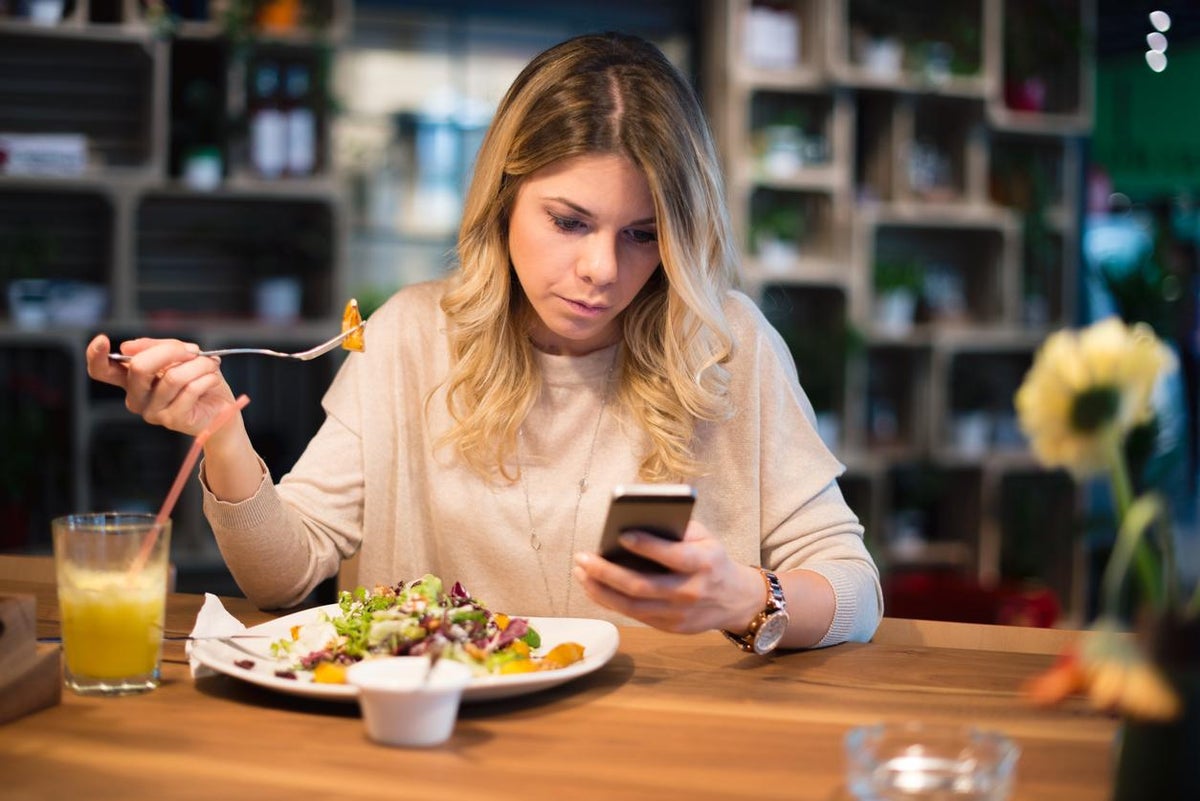
You got home from work. You opened the fridge. You cooked something - or reheated something, or ordered something - and you ate it on the couch, or at your desk, or standing in the kitchen scrolling your phone. The meal lasted twelve minutes. You don't remember what it tasted like.
If this sounds familiar, you're not alone in being alone. Research consistently shows that a growing number of adults eat most of their meals by themselves. In major European cities, the number is even higher - particularly among expats, young professionals, and anyone who moved somewhere new and hasn't yet built the kind of social circle that includes regular dinner companions.
The strange thing is that nobody talks about it. We talk about loneliness in general terms. We talk about mental health. We talk about the difficulty of making friends as an adult. But we rarely name the most visible, most daily, most visceral symptom of all: eating dinner alone, night after night, in a kitchen that's too quiet.
Why dinner matters more than any other meal
Breakfast is functional. Lunch is often a work obligation. But dinner has always been social. Across virtually every culture on earth, dinner is when people gather. It's when families sit together. It's when friends catch up. It's when couples reconnect after a day apart.
When you eat dinner alone, you're not just missing a meal with someone. You're missing the social ritual that humans have used to bond, communicate, and belong for thousands of years.
Anthropologists have documented shared evening meals in every human society ever studied. The campfire, the communal pot, the family table — these are not cultural accidents. They're evolutionary adaptations. Eating together is how humans build trust, share resources, and establish social bonds. It's so deeply wired into us that eating alone doesn't just feel lonely — it registers as a kind of social absence that your brain interprets as something being fundamentally wrong.
This isn't melodrama. Studies have linked solitary eating to higher rates of depression, anxiety, and unhealthy eating patterns. When you eat alone, you tend to eat faster, eat less nutritiously, and enjoy the food less. The meal becomes a task — fuel, not nourishment. And over time, the nightly ritual of eating alone reinforces the feeling that you're disconnected from the people around you.
The modern eating-alone epidemic
The numbers are striking. Across Europe, single-person households have increased dramatically over the past two decades. In the Netherlands alone, over 40% of households are single-person. In cities like Amsterdam, Rotterdam, and The Hague, that percentage is even higher.
But single-person households only tell part of the story. Even people who live with flatmates or partners report eating dinner alone regularly — because schedules don't align, because the flatmate eats in their room, because the couple has fallen into a pattern of parallel evenings on separate screens.
The result is a generation of people who are surrounded by others but eating alone. Connected online but disconnected at the table. Living in dense, vibrant cities but spending the most social hour of the day - dinner - in silence.
The pandemic accelerated this. Remote work normalised staying home. Delivery apps made it possible to eat restaurant food without seeing another human. Social skills atrophied. And for many people, the habit of eating alone became a default that never got corrected.
What eating alone does to you over time
The first night you eat alone in a new city, it feels temporary. The tenth night, it feels like a phase. The hundredth night, it feels like your life.
The insidious thing about eating alone is that it normalises gradually. You stop noticing it. You stop minding it. You develop rituals — the same seat, the same show, the same meal — that make the solitude feel chosen rather than imposed. And at some point, the idea of eating with other people starts to feel strange, effortful, unnecessary.
This is how loneliness becomes structural. It's not a dramatic crisis. It's a slow drift. And dinner is where the drift is most visible, because it's the one part of the day that used to be guaranteed social and now, for millions of people, isn't.
The health implications are real. Research has associated chronic solitary eating with increased risk of metabolic syndrome, cardiovascular issues, and poor nutritional choices. But the mental health impact may be more significant: people who regularly eat alone report higher levels of loneliness, lower life satisfaction, and a weaker sense of belonging.
None of this is inevitable. It's a design problem. Our cities, our work schedules, and our social infrastructure were not built for the number of people now living alone. The solution isn't more apps or more events. It's simpler than that.
The oldest solution to the newest problem
Here's what's interesting: the fix for modern loneliness isn't modern at all.
It's a dinner table.
Not a networking event. Not a dating app. Not a Meetup with fifty strangers in a loud bar. A table, a home-cooked meal, and a small group of people who don't know each other.
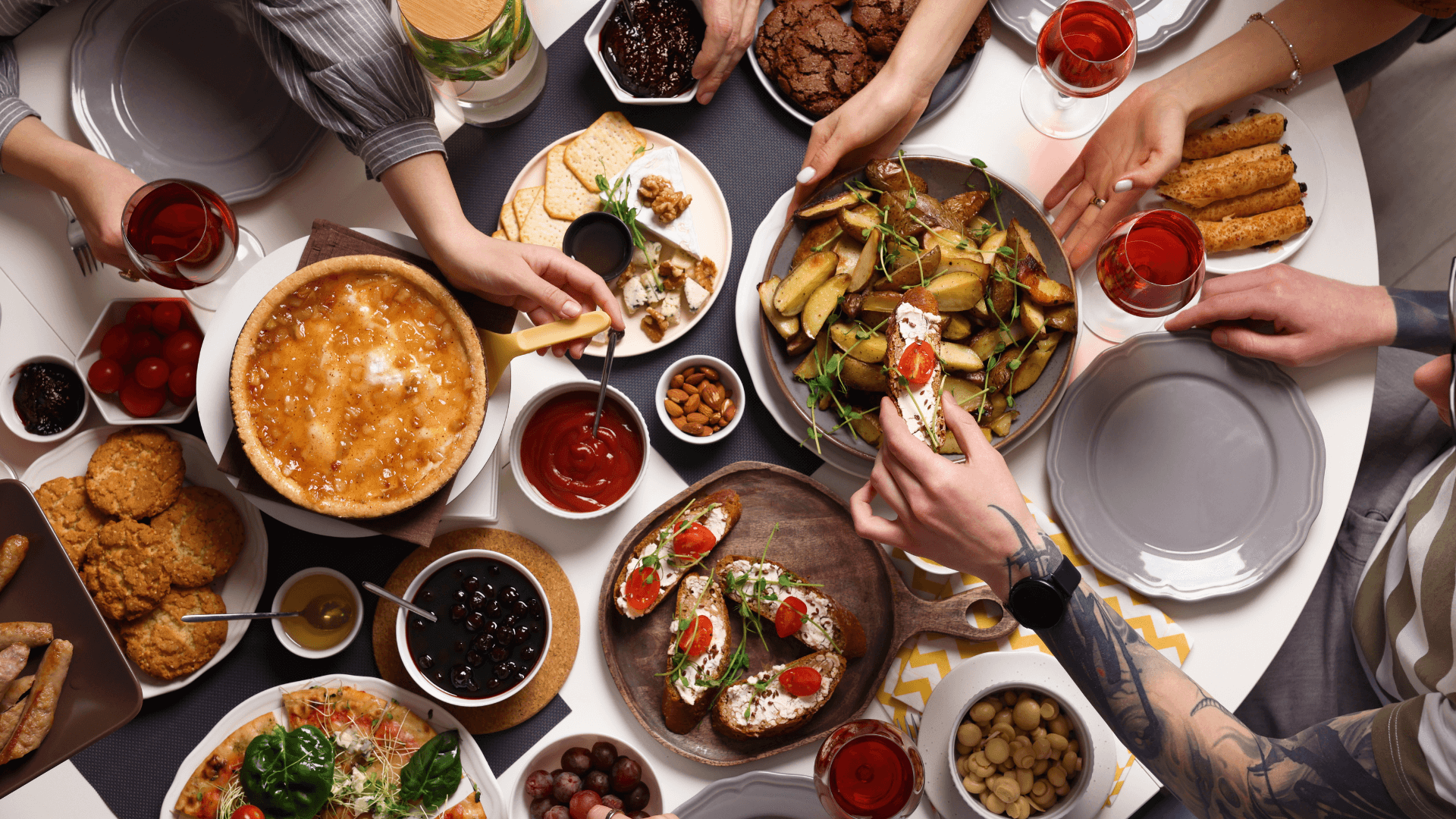
This is what we've been testing. The Dinner Club is a platform where people in the Netherlands cook dinner at home and invite strangers to join. A host creates a dinner listing — choosing the date, the menu, the price, and the number of guests. Strangers browse, book a seat, and show up.
The results have surprised us.
What 900 people, 25 dinners, and 100 guests taught us
Since launching, 900 people have signed up for The Dinner Club across Amsterdam, Rotterdam, The Hague, and Utrecht. 25 dinners have been hosted in people's actual homes. 100 strangers have sat at someone else's kitchen table and eaten a meal cooked by a person they'd never met.
Every single review has been five stars.
Not 4.8. Not "mostly positive with a few complaints." Five stars, across the board, from 100 different people at 25 different dinners in 4 different cities.
Here's what the data tells us about what happens when people stop eating alone:
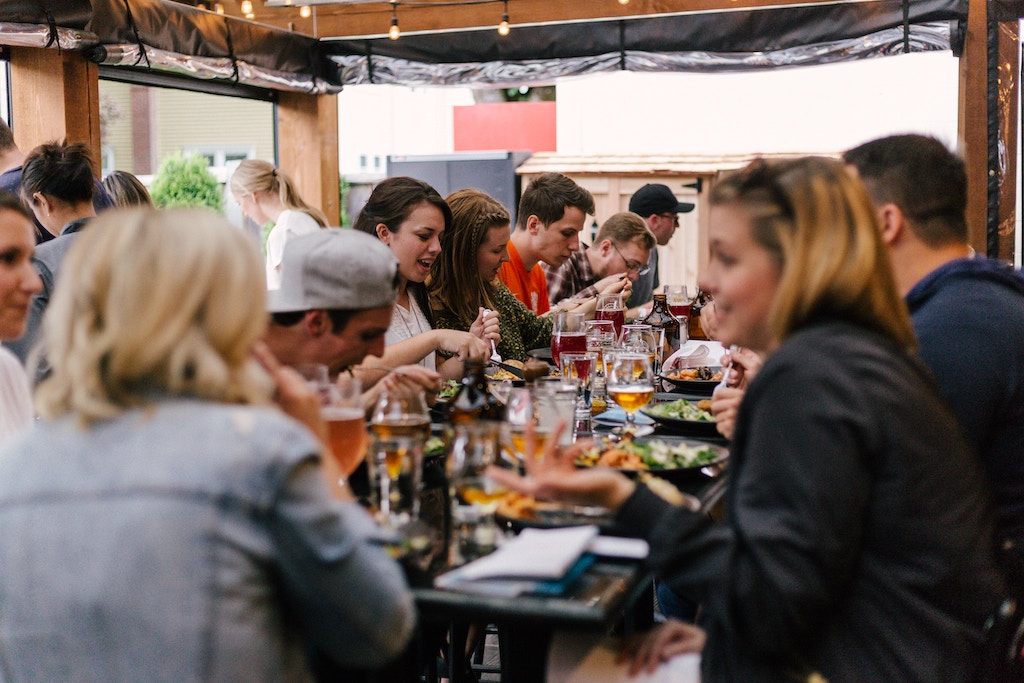
The average dinner lasts three hours. Not because anyone planned it that way, but because nobody wants to leave. The host expects people to stay for two hours. They stay for three. Sometimes four. The conversation carries the evening past every reasonable endpoint.
80% of guests come alone. This was the biggest surprise. We assumed people would bring friends for safety or comfort. They don't. Most guests book solo — specifically because they want to meet new people, not socialise within their existing circle.
Guests come back. Multiple guests have attended two, three, or more dinners. They come back not because the food was exceptional — though it often is — but because the experience of eating with people filled something that eating alone had been slowly emptying.
Guests become hosts. Several people who started as guests have listed their own dinners on the platform. They went from "I have nobody to eat with" to "I'm cooking for strangers every month." That conversion — from lonely to generous — is the most meaningful thing we've seen.
The food is not the point. Guests consistently rate the social experience higher than the culinary one. The meals that get the best feedback are not the most elaborate — they're the most genuine. A simple pasta. A one-pot curry. Tacos where everyone builds their own. The food is the excuse. The connection is the outcome.
Why a dinner table works better than an app
Dating apps promise connection through algorithms. Networking events promise connection through volume. Social media promises connection through content. None of them consistently deliver.
A dinner table works because it removes every barrier that makes modern socialisation difficult:
No screens. You can't scroll your phone at someone's dinner table without it being rude. This alone eliminates the primary escape hatch that prevents people from being present in social situations.
No exit. At a bar, you can leave. At a networking event, you can drift to the next person. At a dinner table, you're there for the evening. This forced commitment is exactly what creates depth — you can't have a meaningful conversation with someone you're about to walk away from.
No performance. A home is not a stage. There's no dress code, no entrance, no atmosphere designed to make you feel a certain way. The atmosphere is someone's actual living room with their actual books on the shelf and their actual cat walking across the table. This domesticity lowers everyone's guard simultaneously.
Shared vulnerability. Everyone at the table is in the same position. Nobody knows anyone. Nobody has a social advantage. The playing field is level in a way that almost no other social setting achieves.
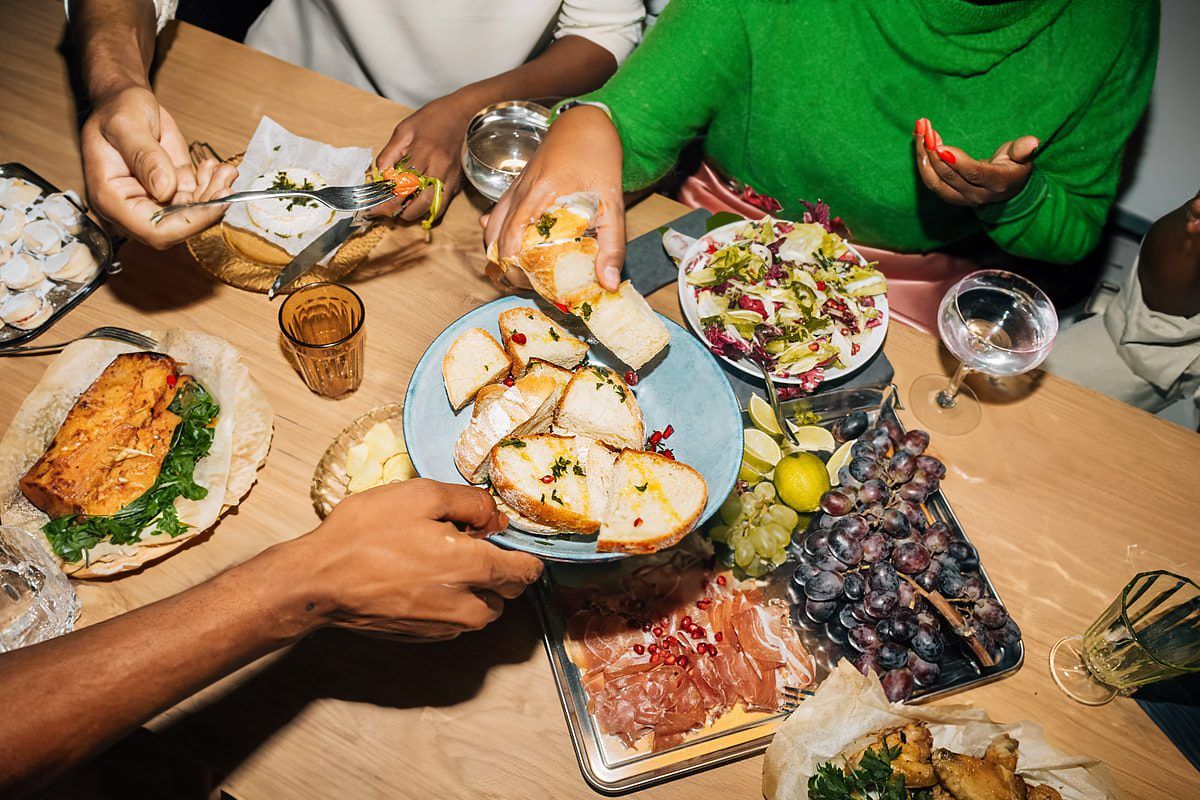
Food as social lubricant. Eating together activates a specific kind of trust. Sharing food is one of the most ancient human bonding behaviours — it predates language, religion, and every other social technology we've invented. When someone cooks for you and you eat what they made, a bond forms that no amount of swiping or networking can replicate.
The dinner table as infrastructure
We tend to think of loneliness as a personal problem — something wrong with the individual. But increasingly, researchers are recognising it as an infrastructure problem. Our cities are designed for efficiency, not connection. Our homes are designed for privacy, not community. Our work lives are designed for productivity, not relationships.
The dinner table is social infrastructure. It's a physical space where connection happens naturally, without force, without apps, without algorithms. It works in every culture, every language, every income bracket, and every city.
The problem is that most people don't have access to it. Their family is in another country. Their friends are busy. Their apartment has a table for one. The dinner table exists in theory but not in practice.
That's the gap The Dinner Club fills. Not by inventing something new, but by making something old accessible again. Someone cooks. Strangers show up. Everyone eats together. The technology is pasta, not an algorithm.
What you can do tonight
If you've been eating alone and you're tired of it, you have three options:
Option 1: Cook for someone. Text a colleague, a neighbour, an acquaintance — anyone — and say "I'm making dinner on Thursday, want to come?" The bar is so low. Most people will say yes because most people are also eating alone and wishing they weren't.
Option 2: Join a dinner with strangers. Browse upcoming dinners on The Dinner Club. Pick one. Book a seat. Show up. You'll spend three hours eating home-cooked food with people you've never met, and you'll leave wondering why you waited so long.
Option 3: Host a dinner for strangers. If you love cooking, list a dinner on The Dinner Club. You pick the date, the menu, the price, and the number of guests. We handle everything else. You keep 85% of every booking. And you'll discover that your kitchen table — the one you've been eating alone at — has room for more people than you thought.
The loneliness epidemic won't be solved by technology. It'll be solved by tables.
Yours has empty chairs tonight. Someone in your city would love to fill them.
Stop eating alone → thedinnerclub.eu
The Dinner Club is a social dining platform in Amsterdam, Rotterdam, The Hague, and Utrecht. 900 users. 100 guests. 25 dinners. Every review: five stars. Most guests come alone. That's the whole point.
Read more: What Happens When Strangers Eat Dinner Together | What Is Social Dining? | How to Meet People in Amsterdam | How to Host a Dinner Party