
Dinner With Strangers in Utrecht: What to Expect
Utrecht is the friendliest city in the Netherlands. So why is it so hard to make friends here?
Ask anyone who's been to Utrecht and they'll tell you the same thing: it feels warmer than Amsterdam, less rough than Rotterdam, more alive than The Hague. The canals have wharves where people sit at water level drinking beer in the sun. The city centre is small enough that you bump into the same people twice in one afternoon. The university brings in 70,000 students who fill every café and park bench with noise and energy.
And yet, if you're not a student and you didn't grow up here, breaking into Utrecht's social fabric is quietly difficult. The city is friendly on the surface — people smile, strangers say hello on the Oudegracht — but friendly and available for friendship are two very different things.
The expat community is growing but still smaller than Amsterdam or The Hague. The social scene revolves heavily around the university, which can feel exclusionary if you're a working professional. And the Dutch social pattern — friends made early, circles closed by 25 — applies here just as much as anywhere else in the Netherlands.
So what do you do if you're in Utrecht, you want to meet people, and the usual options aren't working?
You sit at someone's dinner table.
What is dinner with strangers?
The idea is disarmingly simple. Someone in Utrecht who loves to cook creates a dinner listing on a platform. They pick the date, the menu, the number of guests — usually two to five — and the price. You browse the available dinners, find one that interests you, and book a seat. On the night, you show up at their home. So do a few other people who also booked. None of you know each other. You eat a home-cooked meal together and spend the evening talking.
That's it. No matching algorithm. No personality quiz. No icebreaker games. Just food, a table, and the kind of conversation that happens when strangers share a meal.
It sounds like it should be awkward. And for about ninety seconds, it is. You're standing at someone's front door holding a bottle of wine, wondering what you're doing. Then the door opens, the host smiles, something smells incredible, and the awkwardness dissolves because the setting does what no bar or networking event can do — it forces intimacy without forcing performance.
Why Utrecht is made for this
Utrecht has a quality that makes social dining work better here than in bigger cities: scale.
The city is compact. Everything is within cycling distance. The neighbourhoods feel like villages — Lombok has its own character, Wittevrouwen has its own crowd, the Oudegracht has its own rhythm. When you go to a dinner in someone's home, you're not travelling across a metropolis. You're biking ten minutes to a neighbourhood you've probably walked through before.
That smallness creates a ripple effect. The person you meet at dinner on Tuesday might be the same person you see at the café on Thursday. In Amsterdam, strangers stay strangers because the city is too big for accidental repetition. In Utrecht, the odds of running into someone again are high enough that a single dinner can become a recurring friendship.
Utrecht is also a university city, which means it has a built-in culture of open-mindedness and social experimentation. People here are used to new faces, new ideas, and the energy that comes from a population that's constantly being refreshed with students from across the Netherlands and beyond.
And the food scene — while smaller than Amsterdam or Rotterdam — is genuine and growing. Indonesian on Lombok's Kanaalstraat, Italian on the Twijnstraat, Turkish bakeries in Zuilen, and an increasing number of international home cooks who brought their recipes with them when they moved to Utrecht.
How it works on The Dinner Club
The Dinner Club is a platform where people across the Netherlands host dinners at home for strangers. Here's the guest experience in Utrecht:
Go to thedinnerclub.eu and browse upcoming dinners. Each listing shows the cuisine, the date and time, the neighbourhood, the price, the host's name, and the number of spots remaining. Dinners range from free to €25 — most are between €8 and €15.
Book a seat. The host reviews your profile and approves the booking. Once approved, you receive the address and any details about the evening — what to bring, when to arrive, dietary notes.
Show up. Eat. Talk. Leave with new people in your life.
The groups are small — never more than five guests — which means there's no hiding. No drifting to the corner of the room. No scrolling your phone while pretending to look for someone. You're at a table, shoulder to shoulder, and the conversation includes everyone because the table is too small for it not to.
Browse upcoming dinners in Utrecht → thedinnerclub.eu
What a typical evening looks like
You arrive around seven. The host opens the door — maybe it's someone from Greece who's been in Utrecht for three years, or a Dutch guy who learned to cook Indonesian food from his grandmother, or a Brazilian student who misses her mother's feijoada and wants to share it with anyone who'll listen.
There's a drink in your hand within two minutes. Wine, beer, something non-alcoholic — the host has prepared. One or two other guests are already there. You do the introductions: name, country, what brought you to Utrecht. This part takes about three minutes. It's small talk, and it's the only small talk you'll do all evening.
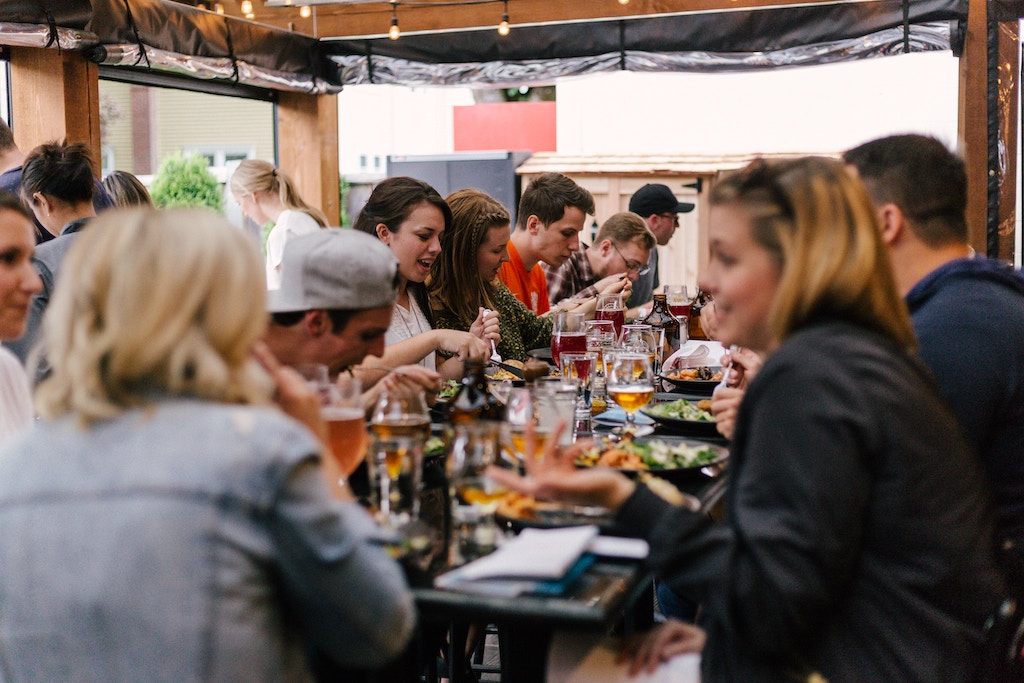
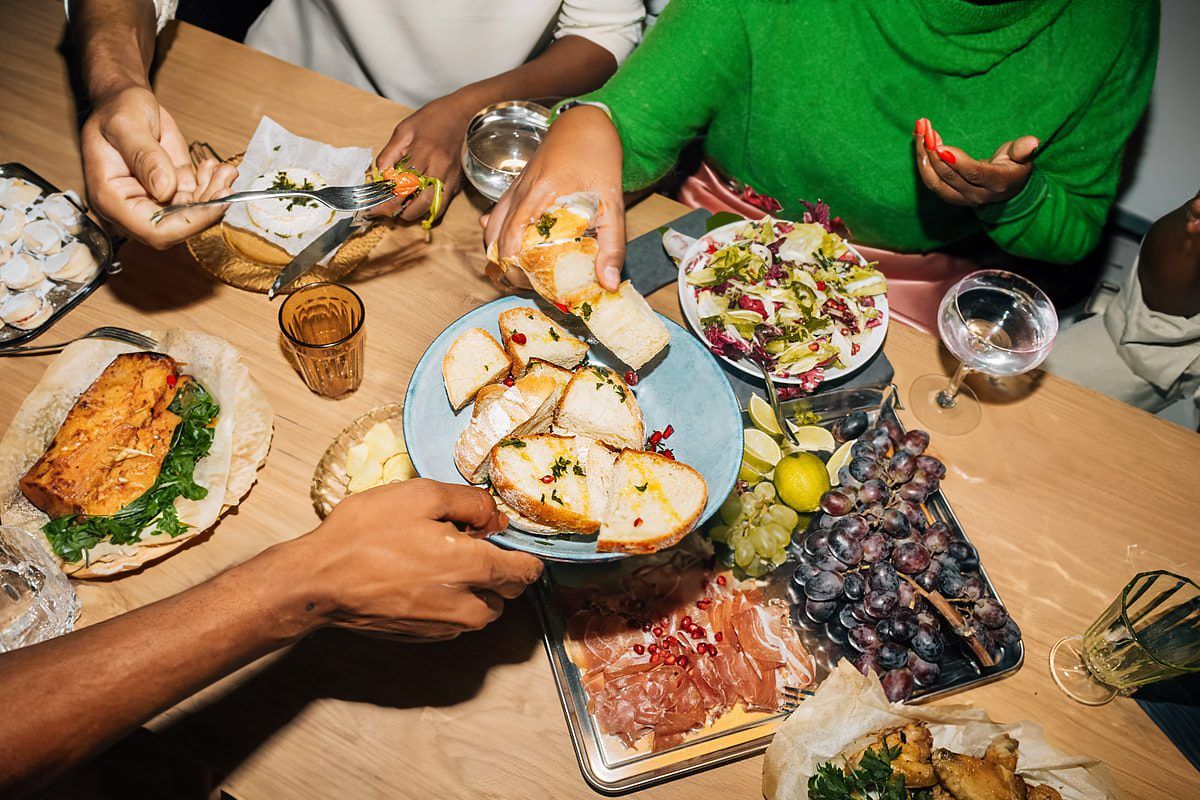
The host brings the food to the table. Everyone sits down. And the conversation changes register. Instead of trading surface-level facts about each other's jobs, people start telling stories. The food triggers it — someone asks the host about the recipe, which leads to a story about their family, which leads to a debate about whose grandmother makes the best tomato sauce, which leads somewhere nobody expected.
The wine helps. The small group helps more. At a table of four or five, there's one conversation, not three. Everyone hears everything. Everyone contributes. The quiet person gets drawn in because there's no crowd noise to hide behind.
By dessert, you know these people. Not their LinkedIn profiles — their actual stories. Where they grew up. What they're worried about. What made them laugh so hard they nearly knocked over their glass.
The evening usually ends around ten or ten-thirty. People linger. Nobody wants to be the first to leave because leaving means the evening is over, and the evening was better than expected. Numbers get exchanged. Someone says "we should do this again." And the strange thing is, in Utrecht, they usually do.
Who comes to these dinners in Utrecht
The mix in Utrecht is different from Amsterdam or Rotterdam. The crowd tends to be:
Young professionals who moved to Utrecht for work and haven't cracked the social code yet. They have colleagues but not friends. They've been to a few Meetup events but nothing stuck. They're looking for something smaller, warmer, and more real.
Students — both Dutch and international — who want social experiences beyond the university bubble. Erasmus exchange students, in particular, are drawn to social dining because they're in Utrecht for a limited time and want to make the most of every evening.
Long-term residents who've watched their social circle shrink. Friends moved to Amsterdam. The couple they used to have dinner with broke up. Their Tuesday evening is empty and they'd rather fill it with strangers than with Netflix.
People who love food and want to experience cuisines they can't find in restaurants. A home-cooked Peruvian dinner in someone's kitchen in Lombok? A Japanese izakaya evening in Wittevrouwen? These are meals that don't exist on any restaurant menu in Utrecht.
The common thread isn't age or nationality or profession. It's openness. The kind of person who books a dinner with strangers is the kind of person who makes a room better by being in it.
What does it cost?
Dinners on The Dinner Club range from free to €25. Most Utrecht dinners fall between €8 and €15.
For a full home-cooked meal — often including a welcome drink, a main course, sides, and sometimes dessert — that's less than a main course at most Utrecht restaurants. And unlike a restaurant, you're not eating in parallel with strangers at separate tables. You're eating with them. The social value of the evening is worth more than the food alone.
Hosts set their own prices. Some charge just enough to cover ingredients. Others charge more for elaborate multi-course dinners. The price is always visible before you book.
What if you want to host in Utrecht?
Utrecht needs hosts. The demand is there — people are searching for dinners, booking seats, and coming back for more. But the platform only works if there are enough kitchens to fill.
If you can cook a pot of pasta, you can host. Here's what it looks like:
You list a dinner on The Dinner Club. You choose the date, the menu, the price, and the number of guests (start with two or three if you're nervous). The platform handles payments, bookings, and guest management. You approve every guest before they receive your address.
You cook. They come. Everyone eats.
Hosts keep 85% of every booking. A dinner for four guests at €12 each earns you €40.80 for an evening of doing something you already enjoy. Host three dinners and you get a Dinner Club hoodie. Host ten and you get a free professional photo shoot of your dinner — which also creates incredible content for your own social media.
Some of the best hosts on the platform never thought of themselves as "hosts." They were just people who liked cooking and were tired of eating alone. Sound familiar?
Host a dinner in Utrecht → thedinnerclub.eu
Utrecht's best neighbourhoods for social dining
Part of the charm of dining at a stranger's home is discovering neighbourhoods through someone's kitchen window. Here's where dinners tend to happen in Utrecht:
Lombok is Utrecht's most multicultural neighbourhood and arguably its most interesting food street. The Kanaalstraat is lined with Moroccan, Turkish, and Indonesian shops and restaurants. A dinner hosted here might be a rijsttafel made from recipes that came to the Netherlands three generations ago.
Wittevrouwen is leafy, residential, and popular with young families and professionals. Dinners here tend to be in apartments with small gardens, candlelit tables, and the kind of quiet intimacy that bigger neighbourhoods can't match.
The city centre — around the Oudegracht and Twijnstraat — is where the most walkable dinners happen. You can bike from Centraal Station to any dinner in the centrum in five minutes.
Zuilen and Overvecht are Utrecht's northern neighbourhoods, more affordable and more diverse. A dinner here might cost less and feel more adventurous — which is often exactly the point.
De Uithof / Utrecht Science Park area is where university students and researchers live. Expect younger hosts, international cuisines, and the energy that comes from a crowd that's still figuring out who they are.
How social dining compares to everything else in Utrecht
Utrecht has options for meeting people. Meetup groups, university events, sports clubs, language exchanges, bar nights. All of them have value. None of them work the way a dinner does.
A Meetup event puts you in a room with thirty people for two hours. You talk to five, remember three, and follow up with zero. A language exchange rotates partners every ten minutes, which is good for practising Dutch but terrible for building depth. A sports club works if you commit for months, but the social payoff is slow.
A dinner with strangers puts you at a table with four people for three hours. You learn their names, their stories, their sense of humour. You see how they eat, how they listen, how they react when someone says something unexpected. By the end, you know these people better than colleagues you've worked with for months.
The reason is simple: food removes the performance. Nobody is trying to impress anyone at a dinner table. The setting is someone's home, not a venue. The group is small enough that pretending is impossible. And the meal creates a natural rhythm — arrival, cooking, eating, talking, lingering — that doesn't exist in any other social format.
One more thing about Utrecht
Utrecht sometimes gets overlooked. It's not the capital. It's not the biggest port. It's not the seat of government. It sits quietly in the middle of the country, doing its own thing while Amsterdam, Rotterdam, and The Hague grab the attention.
But the people who live in Utrecht chose it on purpose. They chose the canals with the wharves. The bike ride that takes eight minutes to cross the entire city. The fact that Centraal Station connects them to everywhere in the Netherlands in under an hour. The quality of life that consistently ranks among the highest in Europe.
Those people — the ones who chose Utrecht — are the ones sitting at dinner tables across the city right now. They're cooking meals they learned from their mothers, from YouTube, from a year they spent in Southeast Asia. They're setting tables for people they haven't met yet.
Your seat is waiting.
Find a dinner in Utrecht → thedinnerclub.eu
The Dinner Club is a social dining platform in Amsterdam, Rotterdam, The Hague, and Utrecht where local hosts cook dinner and strangers book a seat. Dinners are small (2-5 guests), home-cooked, and range from free to €25.
Read more: How to Meet People in Amsterdam | How to Meet People in Rotterdam | How to Meet People in The Hague | What Is Social Dining?